
Bikini vs. One-Piece: How to Choose the Right Swimsuit for You

5 minute read
Choosing between a bikini and a one-piece swimsuit sounds simple—until you start shopping.
Both styles can be flattering, comfortable and practical. The better choice often has less to do with body type and more to do with how you want to feel, where you plan to wear your swimsuit and how active you expect to be.
If you're trying to decide between a bikini and a one-piece, here are a few things to consider before choosing your next swimsuit.
1. Think About How You'll Wear Your Swimsuit
Start with what you'll actually be doing in it.
If your perfect beach day involves relaxing in the sun, swimming and taking it easy, either a bikini or one-piece can work beautifully.
For more active days—paddleboarding, boating, beach games or exploring along the shoreline—you may prefer a swimsuit that feels secure and stays comfortably in place.
The important thing isn't whether the suit has one piece or two. It's whether the particular design gives you the fit and support you need for the way you move.
2. Why Choose a Bikini?
One of the biggest advantages of a bikini is flexibility.
Because the top and bottom are separate, bikinis give you more freedom to find a combination that works for your proportions and personal style. They are also easy to layer under beach clothing and naturally offer more exposure for tanning.
A bikini may be right for you if you:
- Like the freedom of a two-piece swimsuit
- Want more skin exposed to the sun
- Prefer mixing different swimwear styles
- Want a swimsuit that's easy to pair with shorts, skirts or cover-ups
- Simply feel your best in a bikini
Bikinis also come in far more varieties than the traditional triangle top and brief bottom. Different cuts, straps, coverage levels and details can completely change how a bikini looks and feels.

3. Why Choose a One-Piece?
The modern one-piece has come a long way from being simply the "more covered" swimsuit.
Today's one-piece swimsuits can be athletic, elegant, sophisticated or bold. Cut-outs, interesting necklines, open backs and high-cut legs can make a one-piece every bit as striking as a bikini.
A one-piece may be a good choice if you:
- Prefer more coverage through the torso
- Want a secure feel for swimming or active beach days
- Like a streamlined silhouette
- Want a swimsuit that can double as a bodysuit
- Simply feel more confident in a one-piece
One-pieces can also be surprisingly versatile away from the water. Pair one with denim shorts, a skirt or loose beach pants and it can easily become part of your summer outfit.

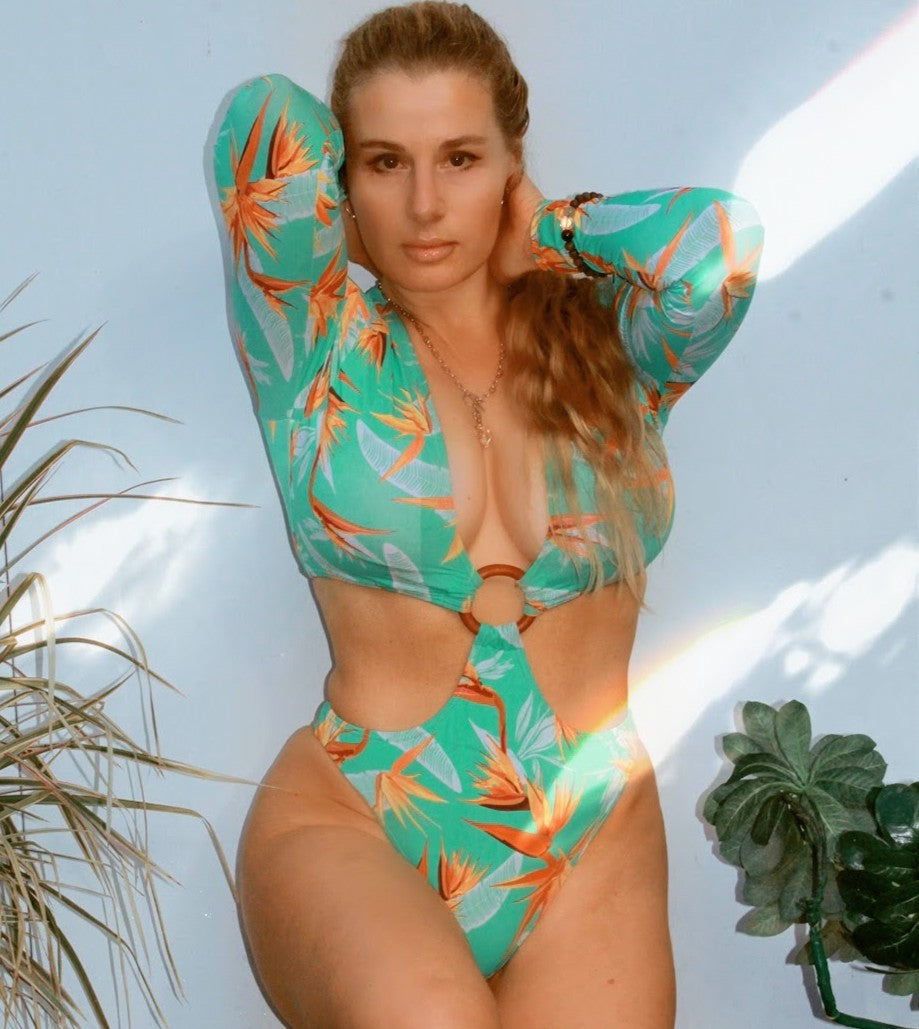
4. What About a Monokini?
If you can't decide between a bikini and a traditional one-piece, there is another option: the monokini.
A monokini combines elements of both.
Strategically placed cut-outs expose more skin than a classic one-piece while maintaining the connected structure of a single swimsuit. Depending on the design, a monokini can be subtle or dramatic.
It's a great option for someone who loves the confidence and statement of a bikini but wants something different from a traditional two-piece.

5. Don't Choose Based Only on Body Type
You've probably seen plenty of advice telling women which swimsuits they "should" wear based on their body shape.
We don't think choosing swimwear needs to work that way.
A woman with curves doesn't automatically need a one-piece. A woman with a smaller bust doesn't automatically need padding. And you don't need a particular body shape to wear a bikini.
Fit matters. Proportion matters. Comfort matters.
But ultimately, the swimsuit that flatters you most is often the one you feel comfortable and confident wearing.
6. Consider Coverage and Support
Instead of asking whether bikinis or one-pieces are more flattering, look at the individual design.
Pay attention to:
Bust support: Look at the straps, neckline and construction of the top.
Bottom coverage: Bikini bottoms can range from minimal to fuller coverage, while one-pieces can vary just as much.
Torso fit: With a one-piece or monokini, torso length matters. The suit should sit naturally against your body without pulling excessively at the shoulders or sagging through the middle.
Leg opening: Higher-cut legs can create a longer-leg appearance, while lower cuts generally provide more coverage.
Small differences in swimsuit construction can have a much bigger effect on fit than simply choosing between a bikini and a one-piece.

7. Think Beyond the Beach
Your swimsuit doesn't have to be something you wear only in the water.
A bikini top can work under an open shirt or beach cover-up. A one-piece can be worn like a bodysuit with shorts or a skirt. A dramatic monokini can become the centerpiece of an entire resort outfit.
If you're packing for a vacation, choosing swimwear that works in several ways can also mean packing fewer pieces.

So, Is a Bikini or One-Piece Better?
Neither.
The best swimsuit is the one that fits your body, suits what you're doing and makes you want to wear it.
Some days that might be a bikini.
Other days it might be a classic one-piece.
And sometimes a monokini gives you exactly the combination you're looking for.
There is no reason your swimwear drawer can't have all three.
At Jasikini, we believe swimwear should give women the freedom to choose what makes them feel confident—whether that's a bikini, a one-piece or something in between.
Explore Jasikini bikinis, one-pieces and monokinis or swim shorts and find the swimsuit that feels right for you.


Leave a comment
This site is protected by hCaptcha and the hCaptcha Privacy Policy and Terms of Service apply.